Anam Circle Logo A think tank preparing new generations for a 21st-century planet.

Local Economy & Governance

Anam Circle collaborates with local leaders to strengthen sustainable economic development and create governance frameworks that prioritize community wellbeing.

Key Issues

Policy Strategies

Improved Success Metrics and Wellbeing Frameworks

Adopting an economic framework that accounts for ecosystem health and natural resource preservation, social equity, and community wellbeing to guide more balanced economic development.

Participatory Decision-Making

Encouraging democratic processes where community members directly participate in how to allocate portions of municipal or regional resources.

Community Wealth Building

Developing investment strategies that keep local money circulating within the community through cooperatives, local banking, and supporting local businesses.

Supporting Research & Data

Our recent study in the NY Capital Region indicates that localized timber and agricultural loops retain 40% more value within the community.

  • Metric: 40% Value Retention
  • Metric: 12% Net Emission Reduction
Download Policy Brief

Regional Impact Forecast

Projected outcomes of transitioning the NY Capital Region to a circular governance framework.

0
%

Wealth Retention

Increase in local capital remaining within community supply chains.

0
%

Carbon Reduction

Net reduction in Scope 3 emissions through regionalized logistics.

0
+

Governance Partners

Municipal leaders and organizations engaged in our 2026 framework.

Ecological Framework

Restorative Resource Loops

Transitioning from "Take-Make-Waste" to a circular model that restores regional ecosystems while meeting 21st-century needs.

Our Expertise & Services

Anam Circle bridges the gap between ecological research and industrial application. We help organizations transition to bio-based feedstocks and closed-loop waste systems.

  • Bio-Based Supply Chain Audit: We identify opportunities to replace extractive materials with regional biological alternatives.
  • Waste-to-Resource Mapping: Spatial analysis of regional organic waste streams for localized upcycling.
  • Life Cycle Assessment (LCA): Quantifying the carbon-reduction impact of shifting to circular materials.

Regenerative Inputs

Utilizing NY Capital Region timber and agricultural waste as primary feedstocks for local industry, reducing reliance on global shipping.

Closed-Loop Policy

Ensuring biological nutrients return to local soils rather than being exported, maintaining regional fertility and biodiversity.

Our Role

Anam Circle fosters sustainable economic growth in the New York State Capital Region by providing specialized research, strategic guidance, policy frameworks, and systems design for organizations, businesses, and governments.

Our work includes developing metrics and indicators that empower local leaders to guide their communities to equitable and sustainable economic development and long-term regional community resilience through systems-based decision making.

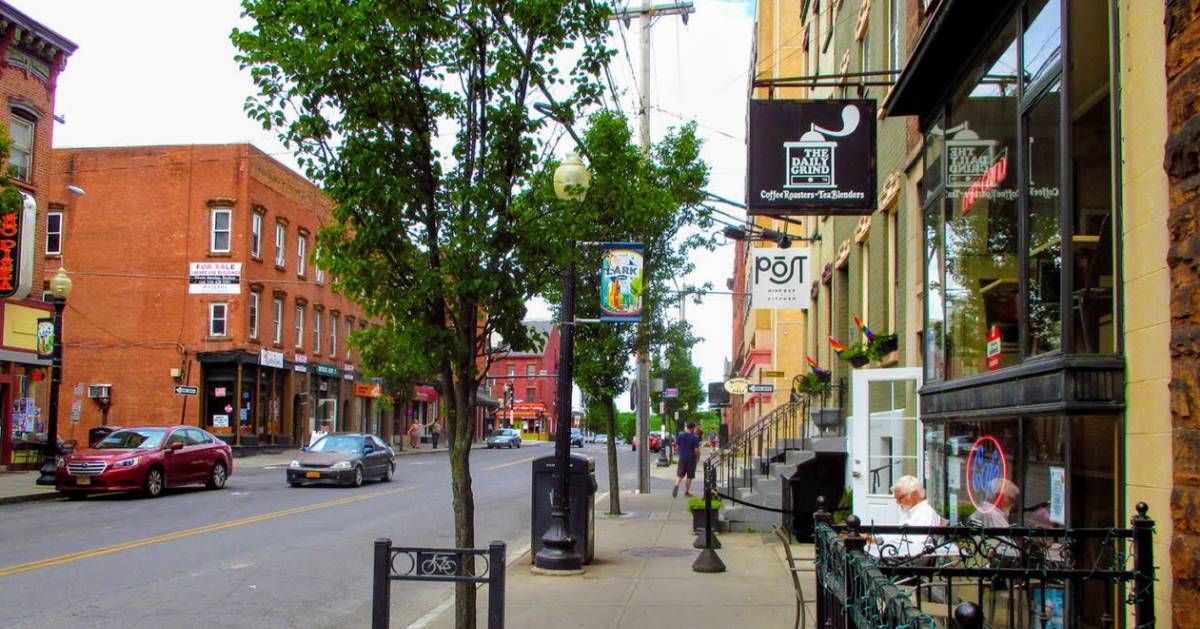
View of downtown Albany, describing Anam Circle's work in promoting local economic growth

Interested in improving your local economy and governance systems?

Reach out to discuss how we can work together.

Contact Anam Circle

Local Economy & Governance Insights

View All Local Economy & Governance Articles

Loading recent insights...

Local Economy & Governance FAQs

Ecological economics is a field that views the economy as a subsystem of the Earth's ecosystem. Unlike traditional models that focus solely on market growth, it prioritizes long-term sustainability, resource limits, and the fair distribution of wealth to ensure humans thrive within planetary boundaries.
While GDP measures the total value of goods and services produced, wellbeing frameworks (like the Genuine Progress Indicator) also factor in social health, environmental degradation, and income inequality. This provides local leaders with a more accurate "dashboard" for community success.
It is a collaborative approach to local economic development that keeps wealth "at home." By supporting local business cooperatives, regional banking, and anchor institution procurement, we prevent wealth leakage to large external corporations.
Participatory governance, such as participatory budgeting, allows citizens to have a direct say in how public funds are spent. This increases civic engagement, builds trust in local institutions, and ensures that resources are allocated to the projects the community needs most.
We bridge the gap between academic research and local policy. We provide New York Capital Region organizations with vulnerability mapping, wealth-flow analysis, and strategic frameworks to transition toward a more resilient, equitable, and localized economy.